

Brick and interlock factory

Study application

Mashroo3k Economic Consulting Company offers a feasibility study for a brick and interlocking block factory project, with the highest return on investment and the best payback period. This study is based on a series of in-depth studies of the size of the Yemeni market, an analysis of the strategies of local and foreign competitors, and the provision of competitive pricing.

Capital

Rate of return

Payback period Third year

Description of a Brick and Interlocking Factory

Description of a Brick and Interlocking Factory

Due to the increasing demand for cement products and the tremendous boom in the construction sector in Yemen, Mashroo3k Company directs investors interested in investing in Yemen to invest in a brick and interlocking factory project based on accurate studies conducted by Mashroo3k Company. These studies help achieve the best possible return on investment and the best payback period.

Mashroo3k Economic Consulting Company directs investors interested in investing in a block and interlocking factory project in Yemen, or developing their existing projects, to seek the advice of specialized consultants through Mashroo3k Company. These consultants help them determine the best production lines and how to attract skilled workers, helping the project deliver superior products and achieve the highest possible demand.

Brick and Interlocking Factory Products

Brick and Interlocking Factory Products

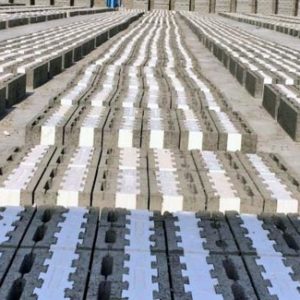
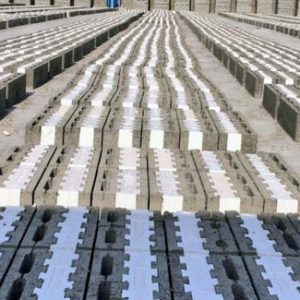
  • 8*16 Hole Brick
  • 6*16 Hole Brick
  • 4*16 Hole Brick
  • 8*16 Hole Brick
  • 6*16 Hole Brick
  • 4*16 Hole Brick
  • Interlocking
Why Mashroo3k ?

Why Mashroo3k ?

  • Mashroo3k has over 11 years of experience in preparing feasibility studies, conducting market research, and providing comprehensive consulting services.
  • Mashroo3k has offices in 7 international branches, located in Saudi Arabia, the UAE, Egypt, Qatar, Oman, Yemen, and Iraq, in addition to its agents in China, Singapore, and other countries.
    Having delivered over 7,000 feasibility studies, Mashroo3k has helped thousands of clients achieve their investment goals.
  • Mashroo3k’s services are accredited and trusted by all financial institutions and funding entities across the Middle East.
  • The company’s geographic reach spans 35 countries across all continents.
  • Mashroo3k holds membership in over 100 prestigious international organizations specializing in market research and business management.
  • Its team consists of 350 consultants with deep expertise in promising economic sectors, ensuring tailored solutions and strategies that meet clients’ needs.
  • Mashroo3k is partnered with more than 10,200 suppliers across 22 countries, providing logistical support for projects, including production lines, raw materials, machinery, and equipment.
  • With an extensive database, Mashroo3k enhances the accuracy of its forecasts and analyses, strengthening its risk management capabilities.
  • Project Features
  • Study Contents
  • Sector indicators
  • The project as an investment opportunity
مؤشرات القطاع

Uses of Interlocking Blocks:

Organizing and decorating spaces adjacent to homes.
Decorating gardens and walkways.
Paving pedestrian paths and parking areas.
Paving public service areas.
Paving roads, parking lots, and gas stations.
Paving open spaces for heavy industries, ports, and warehouses.

Advantages of Cement Block Factory Products:
Technical Advantages:
Hollow blocks.
Larger in size than solid blocks.
Lighter in weight.
Easy and quick to build walls.
Vacations can be filled with steel bars and concrete, achieving high earthquake resistance.
Air space provides good thermal insulation.
Cavities can be used for electrical and plumbing installations.
Economic Advantages:
Production can be started with little capital.
Less labor time is required for construction when using concrete blocks.
Less cement mortar consumption.
Production costs of concrete blocks are slightly lower than fireclay bricks.

Executive summary

  • About the project
  • Financial indicators
  • Justifications for establishing the project
  • Government investment incentives in the project field
  • Target markets
  • Indicators and final results of the project

Study project services/products

  • Project Description and All Its Products/Services.
  • Project Advantages and Production Requirements.

Market Size Analysis

  • Understanding Distribution Channels.
  • Consumer Behavior, Preferences, and Habits.
  • Competitors’ Products or Services, and Their Strengths and Weaknesses.
  • Market Nature and Characteristics.
  • Demand Size for the Product or Service Offered.
  • Available Market Share of the Target Market.
  • The Optimal Marketing Method.

Risk Assessment

  • Risk Identification.
  • Impact of Risks on the Project.
  • Risk Mitigation Methods

Technical study

  • A detailed description of the project’s products, expected production capacity, and determination of investment costs.
  • Determining the required electricity and water capacity.
  • Determining the project’s labor requirements.
  • Determining the project’s requirements.
  • Calculating construction and building costs.
  • Calculating the total capital
  • Determining the annual operating costs.
  • Determining the amount of working capital.

Financial study

  • Total investment costs required for the project.
  • Organizing cash flow statements, income statements, and the balance sheet for the first ten years of operation.
  • Determine the expected annual revenues of the project in light of the specified operational capacities
  • The optimal financing structure for the project in light of investors’ capabilities and financing conditions.
  • The project’s financial indicators and sensitivity analysis.

Organizational and administrative study

  • Project workforce.
  • Organizational structure.
  • Job responsibilities.
المشروع كفرصة استثمارية

Given the importance of the sector, “Mashroo3k” presents below the key indicators for the construction and building sector in the Gulf Cooperation Council (GCC) countries:

Saudi Arabia:

  • The GDP of the construction and building sector in Saudi Arabia amounts to 168,750 million SAR.

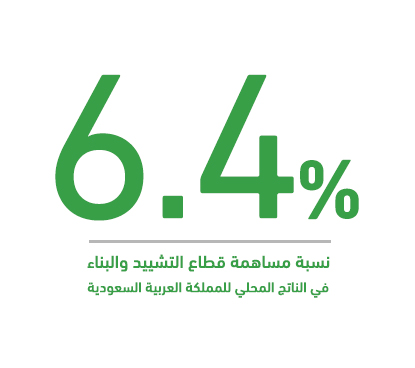
  • The sector contributes 4.66% to the national GDP.

  • The number of companies operating in the sector is 148,026.

  • The sector employs 3,541,977 individuals.

  • The value of projects executed in the sector, according to the latest statistics, is 311,563,369 thousand SAR.

  • Saudi Arabia holds the leading regional position as the largest construction market, with an annual market value exceeding $100 billion USD.

United Arab Emirates (UAE):

  • The GDP of the construction and building sector is 123,953 million AED.

  • The sector contributes 8.3% to the national GDP.

  • The number of companies operating in the sector is 42,428.

  • The sector employs 1,564,095 individuals across the UAE.

Kingdom of Bahrain:

  • The GDP of the construction and building sector is 936.79 million BHD.

  • The sector contributes 7.70% to the national GDP.

  • In 2016, the sector’s value did not exceed 857 million BHD, but in just a few years, it grew to 945.51 million BHD.

Sultanate of Oman:

  • The GDP of the sector amounts to 1,943 million OMR.

  • The sector contributes 6.7% to the national GDP.

  • The sector employs 548,999 individuals.

  • The construction and building sector accounts for 22.4% of Omani employees in both private and public sectors.

  • It also represents 29.6% of the total expatriate workforce in Oman.

Kuwait:

  • The GDP of the construction and building sector is 838.9 million KWD.

  • The sector contributes 2.14% to the national GDP.

  • The number of companies operating in the sector is 1,502.

  • The sector employs 187,705 individuals.

Qatar:

  • The GDP of the construction and building sector is 81,215 million QAR.

  • The sector contributes 12.1% to the national GDP.

  • The number of companies operating in the sector is 5,629.

  • The sector employs 840,999 individuals.

The construction and building sector accounts for more than 40% of the economically active population. It is considered a promising sector, making investment in its activities highly profitable. With population growth and infrastructure development, the sector is expected to remain a key investment destination.
Experts anticipate that the construction market will grow by 4.2% over the next three years, with its total value projected to reach $10.5 trillion by 2023.

Global Construction and Building Sector:

  • In 2020, the estimated global construction output was approximately $10.7 trillion USD.

  • It is expected to grow by 42% ($4.5 trillion USD) between 2020 and 2030, reaching a total of $15.2 trillion USD by the end of the decade.


 
مؤشرات المشروع

The construction sector contributes approximately 13% of the global GDP, and this percentage is expected to rise to 13.5% by 2030. According to our available statistics, infrastructure will top the list of the fastest-growing sub-sectors in the construction sector, at a rate of 4% during the period (2020-2030).


By sector


Capital(By the million)


Rate of return


  • Similar Projects

Similar Projects

steel wire factory

Capital

Rate of return

Study application

Gypsum quarry

Capital

Rate of return

Study application