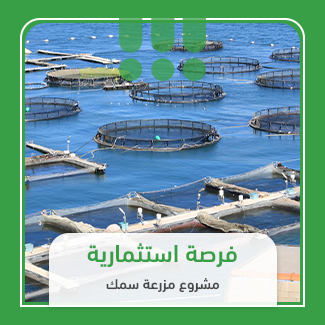
A fish farm project is a sustainable farm that uses a closed ecosystem to simultaneously grow plants and raise fish. Water containing organic waste from fish farming is used to feed the plants. The plants, in turn, purify the water from waste and recycle the purified water for fish farming. This aquaponics system is effective as it eliminates water waste and recycles it. It also provides larger quantities of crops compared to traditional farming. Mashroo3k Consulting Company confirms that a fish farm project will be profitable and economically feasible due to increased efficiency and production volume, space savings, and improved food quality. Because the project will reduce negative environmental impacts, it will receive governmental and community support.
In 2022, the global seafood market was valued at US$250.02 billion and is expected to reach US$349.5 billion by 2027.
The fish and seafood sector revenue reached USD 611.80 billion and the market is expected to grow at a CAGR of 6.23% during the period (2023-2027).
The global fish and seafood market will reach 39.06 billion kg by 2027.
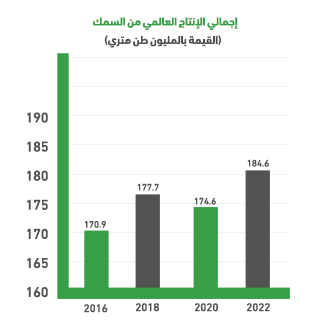
In 2022, global fish production reached 184.6 million metric tons, up from 169.2 million metric tons in 2015.
The global vegetable market revenue is expected to grow at a rate of 6.40% during the period (2023-2027).
In the vegetable sector, the market size is expected to reach 599 billion kg by 2027.
Total fish production in Yemen amounted to approximately 23,322 tons, with a value of 30,755 million riyals.
_ 19.9% average annual growth in fish production in Yemen over the past five years.
Yemen’s total vegetable production reached 904,492 tons, worth 154,497 million riyals.
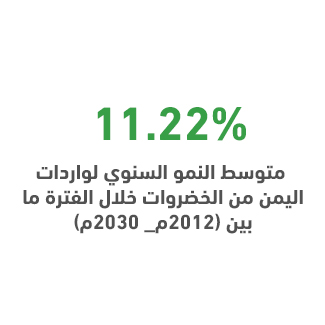
In 2021, Yemen’s vegetable imports amounted to approximately US$84.3 million, and by 2030, this value is expected to reach US$124.3 million.